How Much Exercise Does a Whippet Need?

We are asked all the time, does a Whippet need lots of exercise? The short answer is no—not as much as their impressive speed and athletic build might suggest. Whippets are famous for zoomies and explosive sprints, but they are most frequently found dozing under a blanket. Like many breeds, most whippets thrive on a sensible daily routine that combines walks, lots of chances to sniff, occasional opportunities to run safely and plenty of mental stimulation.
Let’s look at typical Whippet exercise requirements, how their needs change with age and health, and how to balance physical activity with rest. We’ll also cover safe running, indoor alternatives for wet days (there is no getting them out in rain is there?) and the signs that your Whippet may be getting too much—or too little—exercise.

Quick answer: how much exercise does a Whippet need?
Most healthy adult Whippets are comfortable with around 1-1 ½ hours of exercise each day, This is best divided between one or two walks, including plenty of relaxed sniffing. This is a very broad starting point – your whippet may need more or less depending on many things.
Age, health, fitness, temperament and the weather all make a difference. A young, lively whippet may enjoy longer adventures, while an older dog will usually prefer several short outings. What matters most is a routine that leaves your dog content and comfortable rather than exhausted.
Understanding the Whippet’s energy levels
Whippets were bred for speed, not endless stamina. They can accelerate dramatically and race around for a few minutes before deciding that the sofa is a much better option. This is known as zoomies in the whippet world! This pattern sometimes leads people to assume that they need hours of hard exercise, but that is usually not at all true.
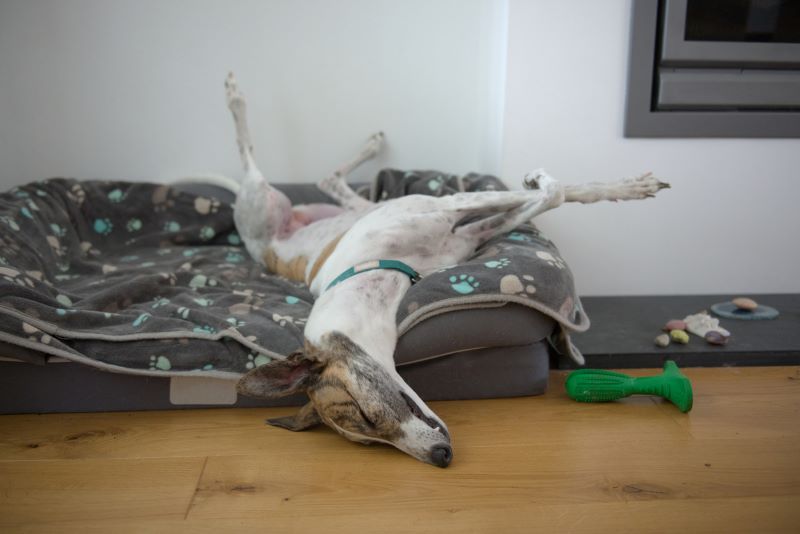
Indoors, adult whippets are usually quiet and settled when their needs have been met. A good day includes movement, opportunities to sniff and explore, interaction with you, cuddles, and plenty of uninterrupted sleep. Dogs do need 12–14 hours of sleep in each 24-hour period- much more than we might think. Mental enrichment can be just as valuable as adding another long walk. Oh and don’t forget the blankets- you must keep them cosy!
A typical daily exercise routine
An example of a daily routine might include a morning walk, a shorter outing later in the day and a few minutes of play or train at home. Walks do not have to be fast from beginning to end. Allowing your whippet to sniff, investigate, socialise, and take in the environment provides useful mental stimulation. Ideas for mental stimulation here.
What about getting them off-lead? Safe chances to be off-lead can be included depending on the individual dog and the reliability of their recall. A secure field or enclosed garden is ideal for those with sketchier skills. Many whippets love to run, whilst others prefer to potter and sniff- we have had one of each kind!
Whippet exercise needs by age
Whippet puppies
Congratulations if you are a new whippet puppy owner! Puppies need gentle little and often activity rather than long, forced walks. Short explorations, play, training and plenty of sleep help them develop without placing unnecessary strain on growing joints. Your vet can offer guidance tailored to your puppy’s stage of growth. Puppy training will also mentally stimulate your whippet baby, and offer important socialisation opportunities.

Healthy adult Whippets
As previously discussed, healthy adults enjoy roughly 1-1 ½ hours of daily activity, split in a way that suits the dog and the household. This can include lead walks, sniffing, socialising, play, and safe running. Build up distance gradually if you want your Whippet to join longer walks, and pay attention to how well they recover afterwards. Don’t be afraid to have a rest day after long walk day.
Senior Whippets
Caring for an older whippet needs a little thought and care. They still benefit from regular movement, but shorter and more frequent walks may be more comfortable for them. Let them set the pace, provide warmth in cold weather though snazzy whippet wear and avoid slippery or very uneven ground. We have seen the enjoyment of using a pet buggy to help our senior whippets get out and see the world in a more manageable way. Seek veterinary advice if your whippet shows changes in behaviour or any signs of discomfort.

Safe off-lead exercise
Many whippets love a good off-lead run. Their speed and chase instinct can make off-lead exercise risky in an open area however. Reliable recall is valuable, but may be unreliable when faced with the excitement of a squirrel or rabbit. If unsure, use a securely enclosed space unless you are confident that the environment is safe and permitted for off-lead dogs. The use of a tracking device can also bring peace of mind.
If you are going off-lead, a few minutes of walking before an intense sprint can warm up their muscles. Things to watch out for- livestock, grass seed, holes, debris, and considering the needs of other dogs who may be on their leads.

What about when it rains?
Few whippets are enthusiastic about rain. It brings out the reluctant walker in the best of them. Some are satisfied with a raincoat but others go on full walking strike! On a wet, or very cold day, a shorter outdoor toilet and sniffing break, with activities indoors can offer the stimulation they need. Hide a few treats around a room for a fun ‘hide and seek’ session, scatter part of their meal for your dog to find, or use a food puzzle that suits their ability. There are plenty of sniffy games to please them.
Some training time is also good brain work. Practise recall between rooms, teach a new cue or reward calm handling. Indoor enrichment supports a walk; but it does not replace regular opportunities to go outside altogether when you are able to.
Signs of too little or too much exercise
A Whippet who needs more activity or enrichment may become restless, struggle to settle, seek attention constantly or invent their own entertainment. Destructive behaviour can have several causes, however, so do not assume that simply increasing strenuous exercise will solve it. More sniffing, training and predictable interaction may be the better answer. Any changes in behaviour should be discussed with your vet.

Signs that your whippet may have done too much include stiffness, limping, sore paws, unusual fatigue, reluctance to walk or difficulty settling after activity. Stop and seek veterinary advice if you notice pain, breathing difficulty, collapse or a sudden change in movement or behaviour. Like in humans, it is best to increase fitness gradually rather than making a large jump in distance or intensity if possible.
Frequently asked questions
How often should you walk a Whippet?
Most adult Whippets benefit from at least two opportunities to get outside each day, although the length and intensity can vary. Splitting activity into separate outings often suits the breed better than relying on one session.
Can Whippets live happily in a flat?
Yes. A Whippet can live happily in a flat if their exercise, toilet breaks and enrichment needs are met. Their love to relax indoors can make them well suited to smaller homes, but access to safe outdoor space and a dependable routine remain important.
Do Whippets need to run every day?
No. Many enjoy zoomies, but a daily high-speed run is not essential. Walking, sniffing, play and training can provide a balanced day, with safe running offered when suitable. Individual preference and health should guide the routine.
Can a Whippet go on long walks?
A fit adult Whippet can enjoy longer walks if distance is increased gradually and conditions are appropriate. Offer water, allow breaks and watch for tiredness, sore paws or temperature-related discomfort. Puppies, seniors and dogs with medical conditions need a to be considered carefully. You might also notice that your whippet is hungrier after a longer activity so may need to adjust food levels.
How much sleep do whippets need?
This is dependant on activity levels, but guidance recommends at least 12–14 hours of sleep in each 24-hour period.
So, does a whippet need lots of exercise?
Usually, no. Most are happiest with a consistent routine that combines moderate daily walks, chances to sniff and explore, occasional safe sprints, simple training and generous rest. With their needs met, whippets generally love the good life- plenty of beds, blankets, cuddles and rest.
Your whippet will guide you to their individual needs. Adjust the routine for age, health and weather, build up new activities slowly, and speak to your vet if you are concerned about fitness or mobility. With all of that considered, your whippet will be ready for their next adventure with you—and ready to curl up under a blanket afterwards!