Does Your Dog Feel the Cold? How to Tell and What to Do About It

Not every dog is built for British winters. Our beloved whippets most certainly are not If yours shivers on walks, curls into a tight ball on the sofa, or refuses to leave their bed on frosty mornings, they might be feeling the cold more than you realise. So how do you know if your dog is feeling cold?
Which Dogs Feel the Cold Most?
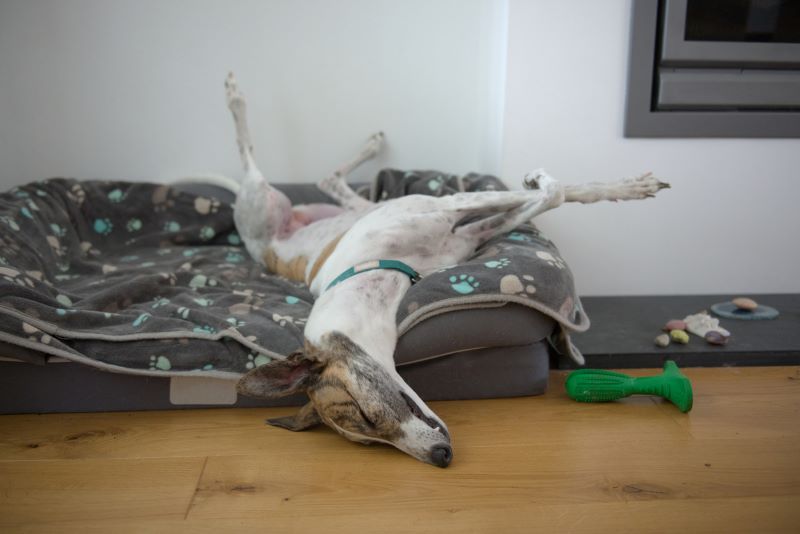
It’s a common myth that all dogs come with built-in insulation. Some breeds genuinely do — Huskies, Bernese Mountain Dogs and Newfoundland dogs were bred for freezing temperatures and have thick double coats to prove it. But plenty of popular UK breeds have very little natural protection against the cold.
Dogs most likely to struggle in winter include:
- Thin-coated breeds: Whippets, Greyhounds, Italian Greyhounds and Vizslas have almost no undercoat and very little body fat. They lose heat rapidly.
- Small breeds: Chihuahuas, Yorkshire Terriers, Miniature Dachshunds and Toy Poodles have a high surface-area-to-body-weight ratio, meaning they cool down faster than larger dogs.
- Senior dogs: Older dogs often have thinner coats, less muscle mass and poorer circulation. Arthritis symptoms also worsen in the cold.
- Puppies: Young dogs haven’t yet developed the ability to regulate their body temperature as effectively as adults.
- Short-haired breeds: Boxers, Staffordshire Bull Terriers, French Bulldogs and Dobermanns all have single-layer coats that offer minimal insulation.
If your dog falls into any of these categories, winter comfort isn’t a luxury — it’s a genuine welfare consideration.
Signs Your Dog Is Too Cold

Dogs can’t tell you they’re cold, but they show it in fairly obvious ways once you know what to look for:
- Shivering or trembling — the most straightforward sign, though some dogs hide it well
- Curling into a tight ball — tucking their nose under their tail to conserve heat
- Reluctance to go outside — refusing to walk, stopping at the door, turning back early on walks, or refusing to leave the house altogether
- Seeking warm spots — pressing against radiators, burrowing under blankets, or lying directly on top of other pets
- Cold ears and paws — touch the tips of their ears and the pads of their feet. If they feel cold to you, your dog is definitely feeling it
- Slower movement — cold muscles are stiff muscles. If your normally bouncy dog seems sluggish on winter mornings, temperature could be the reason
Keeping Your Dog Warm at Home

Central heating helps, but most homes cool down overnight — and that’s precisely when your dog is lying still for hours on a bed that may offer padding but very little actual warmth. So what can you do to help them?
Raise Their Bed Off the Floor
Cold air sinks. If your dog’s bed sits directly on tiles, laminate or stone flooring, they’re sleeping on the coldest surface in the room. Even a simple raised frame or thick rug underneath makes a noticeable difference.
Choose the Right Bedding
Not all pet bedding is equal when it comes to warmth. Standard polyester-filled beds provide cushioning but don’t actively retain heat. For dogs that feel the cold, look for bedding with thermal properties.
One option worth considering is a self-warming pet pad that reflects your dog’s own body heat back to them without needing electricity, cables or batteries. These work particularly well for anxious dogs or puppies who might chew through a heated blanket’s cord — there’s nothing to plug in and no overheating risk. Also consider lovely fluffy blankets.
Block Draughts
Dog beds placed near external doors, cat flaps or single-glazed windows are exposed to constant draughts. Move the bed to a sheltered corner of the room, ideally against an internal wall. If your dog sleeps in a crate, draping a blanket over three sides creates a den-like environment that holds warmth.
Consider a Dog Jumper or Fleece
Indoor clothing isn’t just for Instagram. Thin-coated breeds like Whippets and Greyhounds genuinely benefit from wearing a light fleece around the house during cold spells, particularly in homes where the heating switches off overnight. Particularly senior whippets.
Keeping Your Dog Warm on Walks

Exercise is important year-round, but winter walks require a bit more thought:
- Invest in a proper coat. Not a fashion accessory — a functional, waterproof dog coat that covers the chest and belly. Breeds with thin coats need this from roughly October through to March in most of the UK.
- Shorten the walk if needed. A 20-minute walk in dry cold is fine for most dogs, but prolonged exposure in wind, rain or snow can be dangerous for vulnerable breeds. Watch your dog’s behaviour — if they stop enjoying it, head home. You can enjoy some home based enrichment time instead.
- Protect their paws. Road salt and grit can irritate paw pads and is toxic if licked. Rinse your dog’s feet with warm water after every winter walk, and check between the toes for ice balls if you’ve been walking in snow.
- Walk during the warmest part of the day. In winter, that’s usually between 11am and 2pm. Early morning and evening walks in December can mean temperatures close to or below freezing.
- Dry them thoroughly. A wet dog is a cold dog. Towel-dry your dog as soon as you get home, paying attention to their belly, legs and ears.
Night-Time Warmth

Night is when most dogs feel the cold worst. The heating’s off, nobody’s moving around, and your dog is lying still for six to eight hours on a surface that gradually loses whatever warmth it had.
A few practical solutions:
- Layer their bedding. A thermal pad underneath, a padded bed on top, and a fleece blanket they can burrow into. Three layers trap more air than one thick layer. A calming donut bed with raised edges works especially well here — dogs can curl into the bolstered sides, which traps warm air around their body like a nest. Also consider PJ’s as previously mentioned.
- Keep them off cold floors. If you can’t raise the bed, place a thick yoga mat or folded duvet underneath as insulation from the floor.
- Close the curtains. Windows radiate cold even when shut. Drawing the curtains in the room where your dog sleeps makes a measurable difference to overnight temperature.
- Don’t overheat the room. The goal isn’t tropical — dogs sleep best at around 15 to 20°C. If your dog is panting or moving away from their bed, it’s too warm.
When Cold Becomes Dangerous

Hypothermia in dogs is a genuine medical emergency, though thankfully rare in household pets. Know the warning signs:
- Intense, uncontrollable shivering that suddenly stops (this is worse, not better — it means the body is giving up trying to warm itself)
- Lethargy, weakness or difficulty standing
- Pale or blue-tinged gums
- Shallow, slow breathing
If you see these signs, wrap your dog in warm blankets, offer lukewarm (not hot) water, and contact your vet immediately. Do not use a hairdryer, hot water bottle directly against skin, or submerge them in hot water — rapid rewarming can cause shock.
A Warm Dog Is a Happy Dog

Keeping your dog comfortable in cold weather doesn’t require expensive equipment or drastic changes to your routine. Most of it comes down to observation — noticing when your dog is cold, understanding why, and making simple adjustments to their sleeping area, walk schedule and clothing.
The breeds that feel the cold most are often the ones that love cuddles most too, so if nothing else works, there’s always the sofa.
Winter doesn’t have to be miserable for cold-sensitive dogs. A few thoughtful changes can make the darker months just as comfortable as summer — and your dog will thank you for it, probably by stealing your spot by the radiator.
Dobermanns are listed as having single-layer coats offering minimal insulation, which makes perfect sense for many of the dogs you’ve mentioned. Are their larger body size and active nature typically enough to offset some of the heat loss from that coat type compared to smaller breeds like French Bulldogs?